Fill out the form below and one of our coaching specialists will get back to you within 24 hours.
Error: Contact form not found.
Request a Free Consultation
Fill out the form below and one of our coaching specialists will get back to you within 24 hours.
Error: Contact form not found.
WHAT WE PROVIDE
What we provide
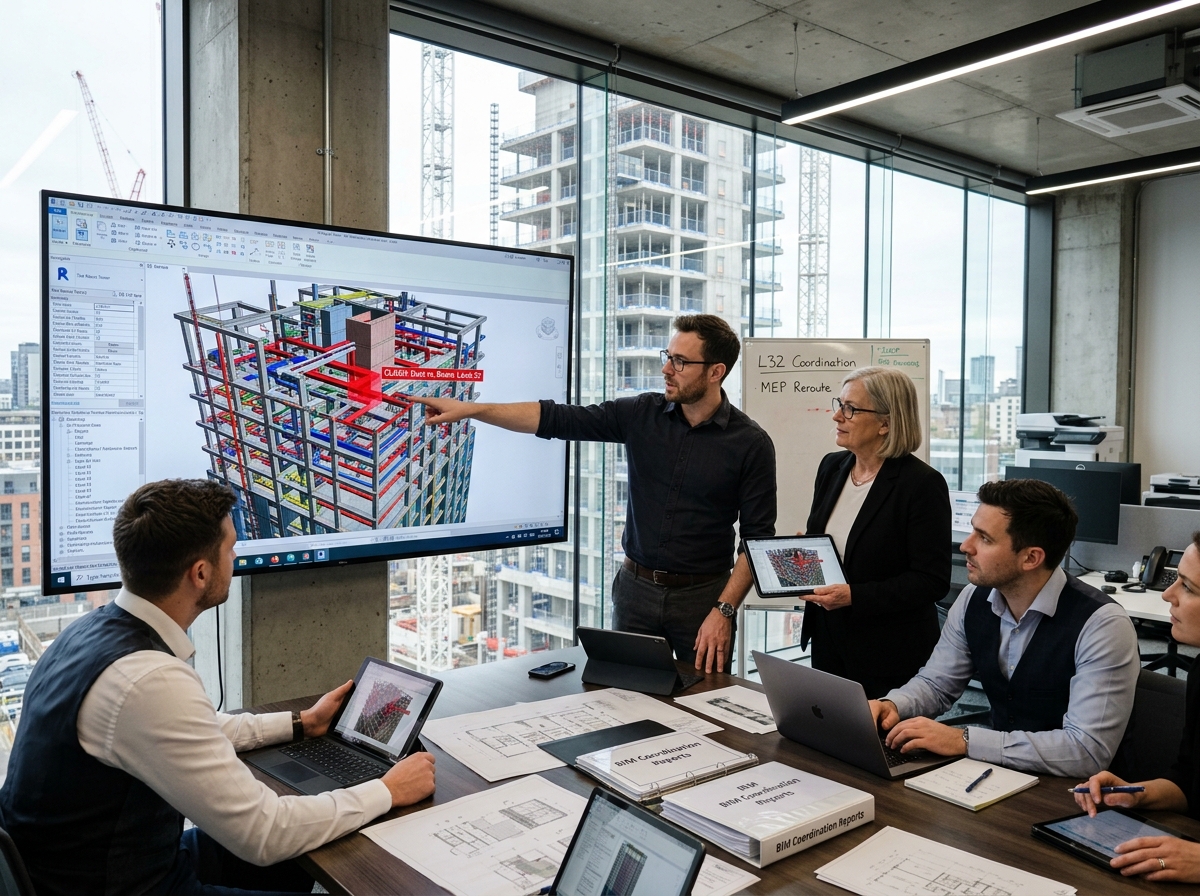
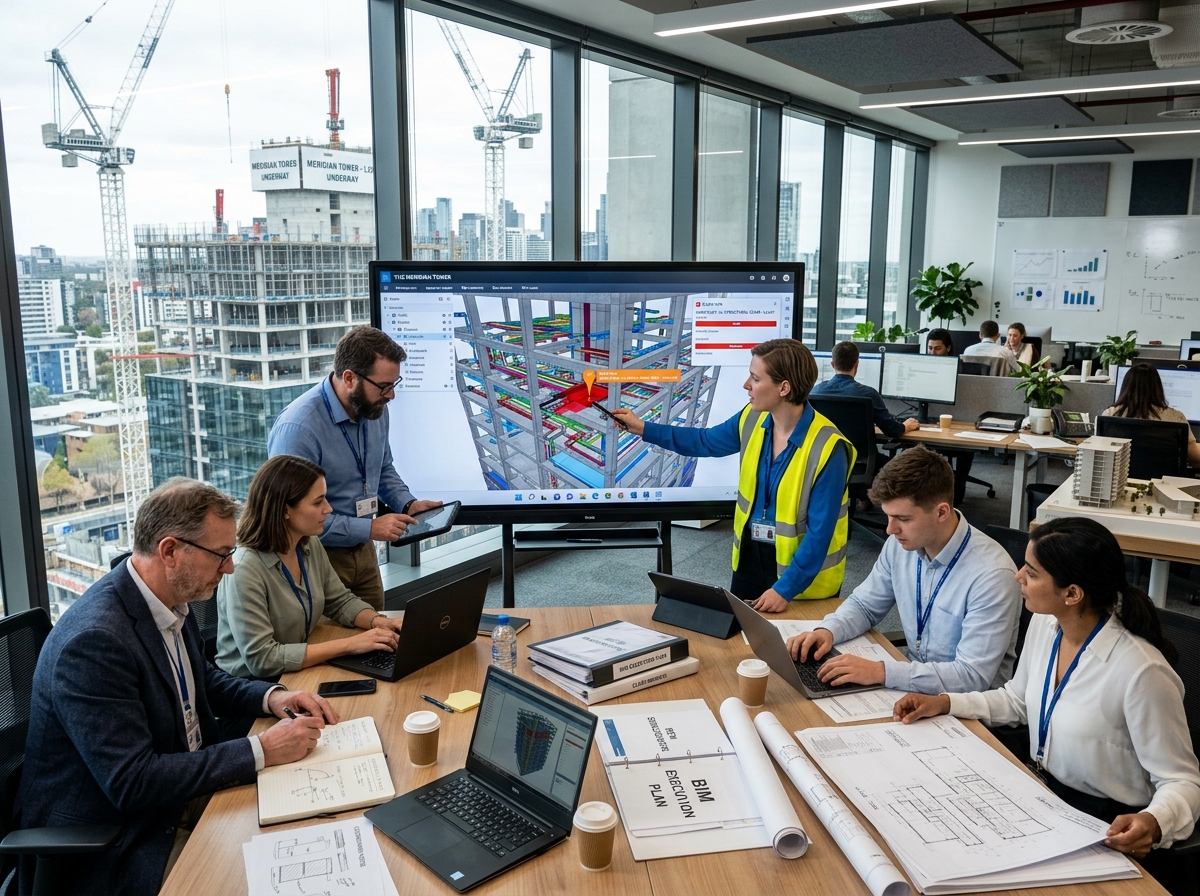
Solvix International provides BIM modelling and coordination support for projects that need clearer interdisciplinary visibility, stronger design communication, and more structured issue resolution. We help clients, consultants, contractors, and project teams use model-based workflows to improve coordination between architectural, structural, and MEP information, reduce avoidable clashes, and create better-quality deliverables for design development, procurement, construction, and record purposes.
This service can be delivered as proactive commercial governance on live projects, an independent review of a troubled cost position, or a targeted verification exercise linked to payment, change, funding, audit, or dispute concerns.
In many construction disputes, the challenge is not simply the absence of data but the absence of structure. Critical information is spread across correspondence, schedules, notices, progress updates, payment records, meeting minutes, instructions, and technical documents. Solvix helps turn that fragmented material into a disciplined narrative and evidence base that legal teams can work with effectively.
The exact scope depends on project complexity, delivery stage, and employer or contractor requirements. In most cases, BIM coordination focuses on the interfaces that create downstream design, construction, procurement, or access problems when not resolved early.
The indicators that turn baseline data and actual performance into decision-ready project intelligence
Planned Value (PV)
Budgeted value of work scheduled to be completed by a reporting date.
Earned Value (EV)
Budgeted value of the work actually performed based on measured progress.
Actual Cost (AC)
Real cost incurred for the work completed during the reporting period.
Cost Performance Index (CPI)
EV ÷ AC. Measures cost efficiency and overspend or underspend trend.
Schedule Performance Index (SPI)
EV ÷ PV. Measures how efficiently the project is progressing against plan.
Forecasts (EAC / ETC / VAC)
Estimate final cost, remaining cost, and expected variance at completion.
ASSESSMENT APPROACH
How Solvix delivers BIM modelling and coordination support
Our approach is structured to make model-based coordination useful rather than purely technical. That means defining the coordination objective, establishing review rules, focusing on interfaces that matter, tracking issues clearly, and issuing outputs that support actual project decisions. Depending on the brief, we can work as a coordination support consultant, technical review resource, or part of a wider delivery team.
1. Brief and information requirement review:
confirm the stage, priority disciplines, model purpose, naming rules, exchange expectations, and delivery constraints.
2. Model setup and federation planning:
agree coordination structure, shared positioning, review zones, and responsibility boundaries.
3. Interdisciplinary review and clash analysis:
examine conflicts, spatial congestion, missing information, and unresolved interfaces.
4. Issue logging and action tracking:
categorise issues, assign responsibilities, record responses, and monitor open versus closed items.
5. Coordination meetings and technical support:
help teams review key problems using model views, extracts, screenshots, and status summaries.
6. Deliverable preparation and reporting:
issue clash reports, issue registers, meeting notes, model-status commentary, and coordination packs aligned with the brief.
RECORDS AND OUTPUTS
Typical deliverables and working environments
BIM coordination value comes not only from the model itself but from how the coordination effort is communicated, prioritised, and managed. We therefore focus on outputs that can be understood and actioned by the relevant project stakeholders.
Typical deliverables
Federated model review packs or discipline coordination views
Clash summaries and prioritised issue registers
Issue screenshots, viewpoint references, and action trackers
Coordination meeting notes and progress summaries
Model-quality comments and delivery-readiness observations
Client-facing or management-level coordination summaries
Common workflow elements
Authoring and review environments agreed with the client team
Discipline model federation and shared coordinate management
Model naming conventions, revision control, and exchange protocols
Issue classification by severity, discipline, location, or package
Review cycles linked to design submissions or construction milestones
OpenBIM or platform-specific coordination processes as required
BIM modelling focuses on creating or developing model content, while BIM coordination focuses on reviewing how multiple discipline models work together and resolving conflicts, interfaces, and information gaps.