Fill out the form below and one of our coaching specialists will get back to you within 24 hours.
Error: Contact form not found.
Request a Free Consultation
Fill out the form below and one of our coaching specialists will get back to you within 24 hours.
Error: Contact form not found.
WHAT WE PROVIDE
What we provide
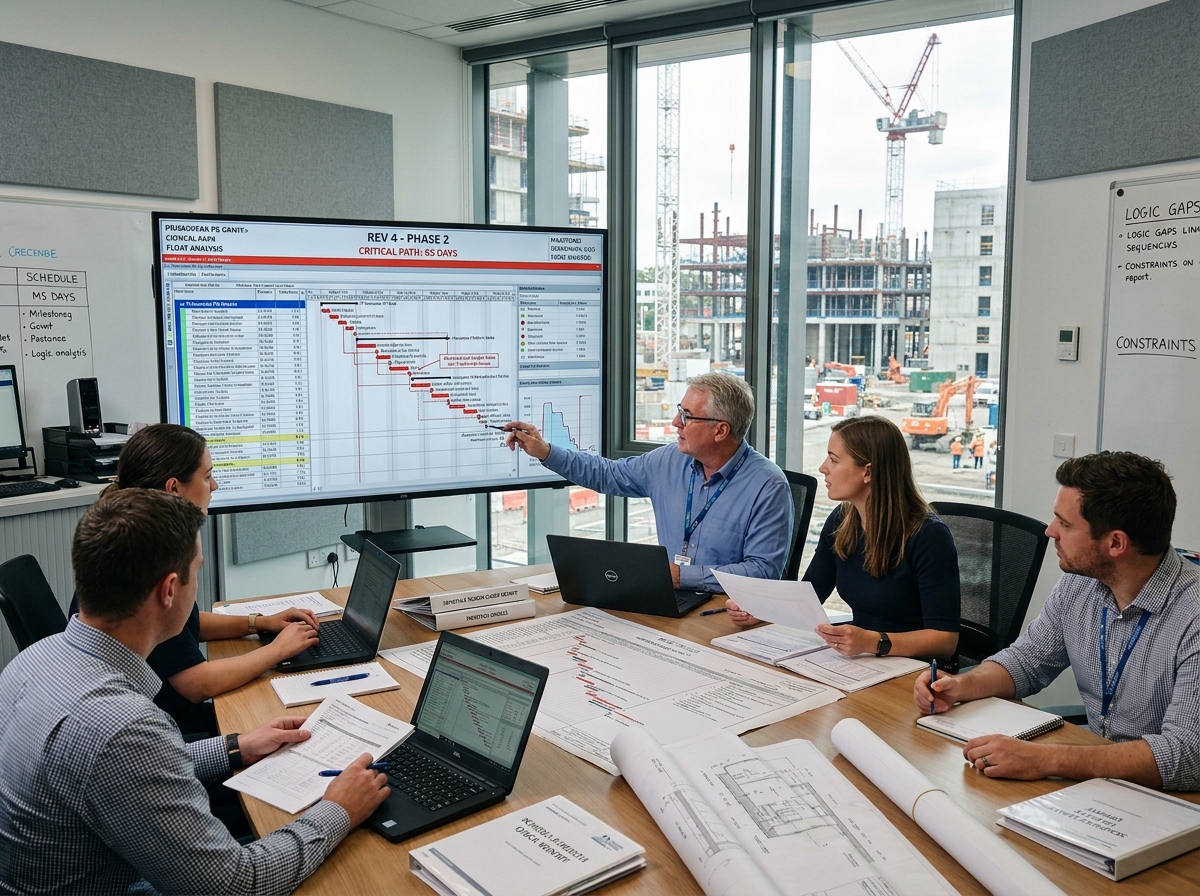
Solvix International provides independent schedule review and health check services for construction and engineering projects that need more than routine programme updates. We assess whether a schedule is properly structured, logically linked, progress-driven, forecast-ready, and capable of supporting sound project decisions. Our reviews help clients identify hidden weaknesses before they affect reporting, recovery planning, extensions of time, claims, expert work, or executive confidence.
A schedule can appear complete yet still be unreliable. Weak logic, excessive constraints, open ends, inconsistent calendars, out-of-sequence progress, and unrealistic remaining durations can distort completion forecasts and undermine the credibility of management reporting. Solvix health checks are designed to detect these issues early, explain why they matter, and recommend practical corrective action.
This service is valuable for project owners, contractors, PMCs, lenders, legal teams, and dispute advisors who need assurance that a programme is suitable for planning, tracking, forecasting, or evidential use.
This service can be delivered as proactive commercial governance on live projects, an independent review of a troubled cost position, or a targeted verification exercise linked to payment, change, funding, audit, or dispute concerns.
We establish the purpose of the review, the schedule version to be assessed, reporting requirements, and the level of detail expected by project leadership or stakeholders.
2. File and metadata review
We examine the native scheduling file, update history, calendar set-up, codes, options, data date, and any supporting narratives or update logs.
3. Technical diagnostics
We test logic, constraints, open ends, lags, dangling activities, path continuity, float patterns, and critical-path behavior using structured review checks.
4. Progress and forecast assessment
We compare recorded progress against logic and sequence to identify out-of-sequence work, unrealistic remaining durations, and unreliable finish forecasts.
5. Findings classification
Issues are grouped by severity and practical consequence, from minor hygiene items to major weaknesses that may distort completion confidence or management reporting.
6. Recommendations and action register
We provide a clear summary of corrective actions, prioritised clean-up steps, and, where needed, guidance for the next schedule submission or update cycle.
A schedule review checks the technical quality and reliability of the programme. A delay analysis investigates the cause and effect of actual delay events, often using forensic methods.
Yes. Baseline health checks are useful for identifying logic, sequencing, and reporting weaknesses before the programme becomes the benchmark for progress measurement.
No. Solvix can review Primavera P6, Microsoft Project, and other schedule exports where sufficient data is available to assess structure, logic, and progress quality.
Traditional schedule updates and cost reports can show that a project is late or overspent, but they do not always explain whether the value of completed work is keeping pace with plan. EVM addresses that gap by connecting scope, time, and cost in one measurement framework. It helps leadership understand not just what has been spent, but what has actually been achieved for that spend and what the trajectory suggests for completion.