







- June 29, 2026
- Uncategorized
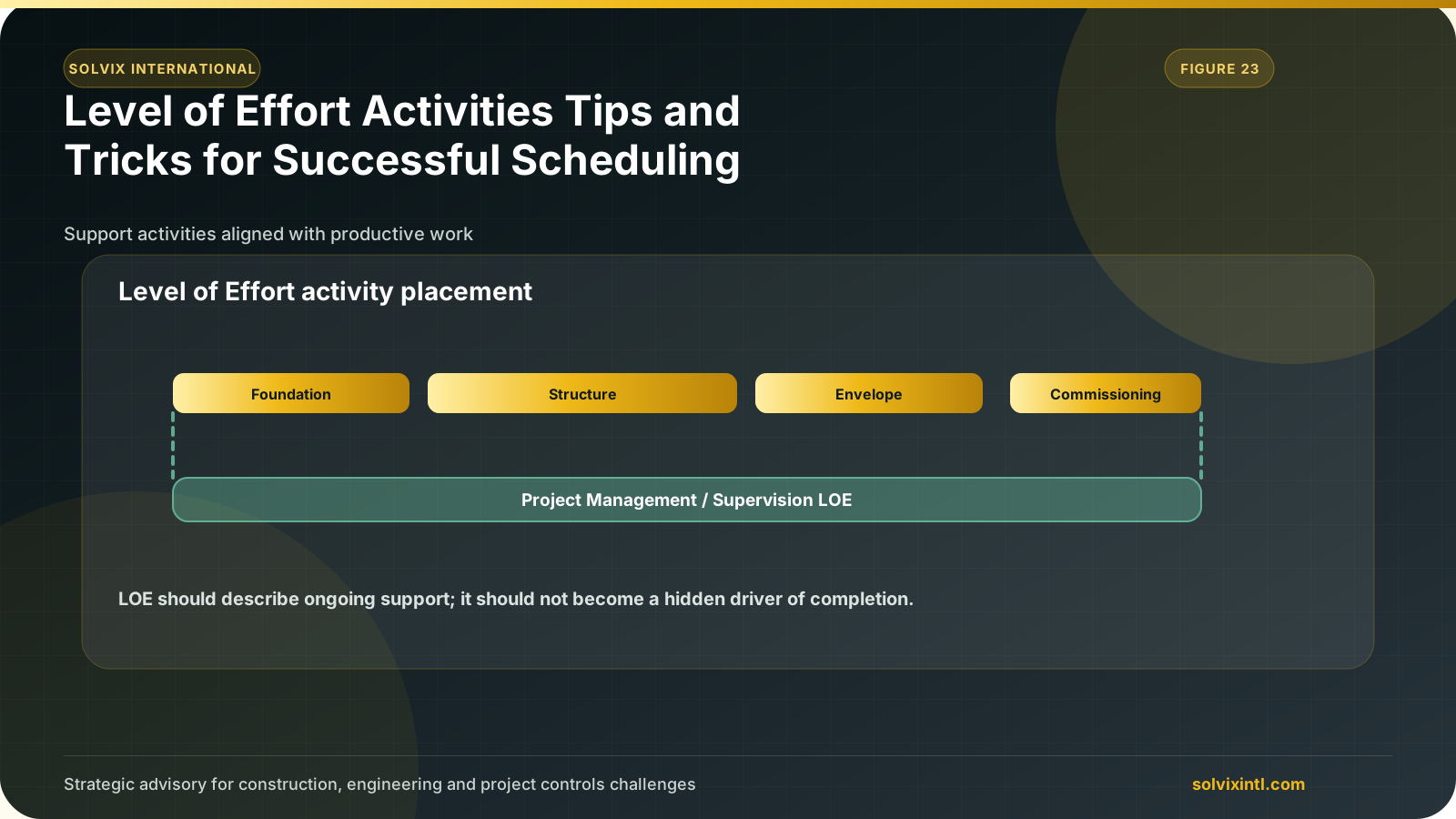
Becoming proficient in the level of effort activities in project planning can make a significant distinction in your career. As people are always concerned about durations and scheduling, those activities provide a strategic scheduling So, let us discuss The Level of Effort activities together and learn some helpful tips and tricks for using them efficiently while planning.
What is Level of Effort (LOE) Activities?
Level-of-effort activities, often abbreviated as (LOE). They include all the activities involved in the project delivery which are the primary tasks necessary to produce the deliverables but do not produce a specific deliverable, yet it still utilizes the resources used in the project. However, it requires cost allocation and tracking so they are tasks such as, project management, supervision, support, or maintenance. They are also unique, and their durations are dependent from its predecessor and successor activities.
Level of Effort (LOE) Activities Purpose
Level Of Effort Activities (LOE) is used in tracking the support tasks that span the project multiple phases, such as project management, administrative support, and quality control (QC) so, they provide accurate representation of the timeline and resources of the non-deliverable tasks
Project Management: coordination, documentation, schedule tracking and budget monitoring to facilitate the project execution and alignment with project objectives.
Quality Control: ensure compliance with project aspects, conducting inspections and taking corrective actions to maintain high quality and to keep up with project requirements.
Administrative Support: keep the project records up to date, organizing meetings, manage communication and ensure effective communication across all the stakeholders.
As you can see activity “Prepare Reports” has the duration of its predecessor and successor where it starts with Design Phase Start and ends with Final Inspection and Handover.
The Importance of Level of Effort (LOE) Activities in Scheduling
Resource allocation: Level of Effort (LOE) activities are vital for precise and resource allocation as it tracks the resources needed throughout the lifecycle of the project. So, the project managers focus on the key resources throughout the project’s lifecycle for the resource utilization.
Timeline tracking: Level of Effort (LOE) activities may have unclear ends, but they still contribute in estimating the continuous progress over the project’s timeline by tracking the duration of the related activities which doesn’t reflect directly in the project duration but reflects the effort exerted to support the main tasks.
Tips for Successfully Scheduling Level of Effort (LOE) Activities
Define Resource Limits: you need to clearly restrict LOE to avoid over usage. So, try to set boundaries for the resources that can be assigned to ensure that Level of Effort (LOE) activities do not use much more resources than the required quantity and maintain efficiency throughout the project.
Defining Clear Boundaries: Level of Effort (LOE) activities needs to be defined with clear start and finish dates and to be linked to a particular milestone which gives a distinct natural to Level of Effort (LOE) activities, prevents scheduling without identification particular end date and ensures the project timeline remains clear and focused.
Proper Linking: Level of Effort (LOE) activities should be correctly linked to related tasks which ensures that they get tracked along with the project progress without skewing with the critical path, Level of Effort (LOE) activities should manage the project phases and making sure they cover the entire project without impacting the timeline calculations.
Regular Updating: Level of Effort (LOE) activities should be updated regularly to keep a precise representation for the project progress also, to reflect the current status of the project which include adjustments to the durations, resources allocation, progress in the project activities.
The Common Pitfalls While Using Level of effort (LOE) & How to Avoid Them
Excessive use of LOE: You can’t overuse LOE as it distorts project schedule, because they increase the use of resources without adding defined objectives. So, to prevent this you have to use Level of effort (LOE) activities moderately and only when it is necessary for the activity or for the support of it.
Incorrect Linking: Level of effort (LOE) activities inappropriate linking make issues while scheduling like linking Level of effort (LOE) activities to unrelated project phases or milestones and inaccurate critical path calculations so, it should be controlled to avoid any misrepresentation in project dependencies.
Neglecting Updates: Level of effort (LOE) activities failed to update regularly which led to risking the control over the project and getting outdated information so, follow a regular review process to ensure LOE tasks reflect the real-time over project progress, to get an accurate timeline and resource tracking over the project.
Advanced Techniques for Monitoring and Controlling (LOE) Activities
Customizing Reports: You can use Primavera P6 customized reports to monitor Level of effort (LOE) activities effectively by separating them from the critical path activities which helps provide clear, focused understandings of the resource usage and also ensures that the reports for the milestones tracking remain organized.
Automating Updates: Primavera P6 uses automation tools such as global changes which allows the project manager to automate updates for Level of effort (LOE) activities by adding specific conditions and parameters so, the Level of effort (LOE) activities can be adjusted in bulk or to be used to simplify the update process and minimize the need for the effort exerted manually.
Training and Awareness: Ensure that all your team members understand the role and the management of Level of effort (LOE) activities which is necessary for accuracy and consistency in the project control process so, make sure to provide training on Level of effort (LOE) activity setup, use, linking, and updates and highlight its importance in project support and scheduling. Finally, try to implement the best practices in your team.
Need support with this topic?
Solvix provides level of effort activity setup and schedule quality review services

ramez.megahed.sci@gmail.com
Head of Architecture & DesignHead of Architecture & Design with over a decade of experience leading large-scale real estate and construction projects. Known for his strategic mindset and leadership excellence, he has successfully driven high-value developments from concept to completion while ensuring operational efficiency and long-term growth.