





Progress Monitoring & Reporting

Book a Free Consultation

Book a Zoom call with a Solvix consultant at a time that suits you. The Zoom link is sent to you as soon as you book.

Book a Free Consultation

Book a Zoom call with a Solvix consultant at a time that suits you. The Zoom link is sent to you as soon as you book.

WHAT WE PROVIDE

What we provide

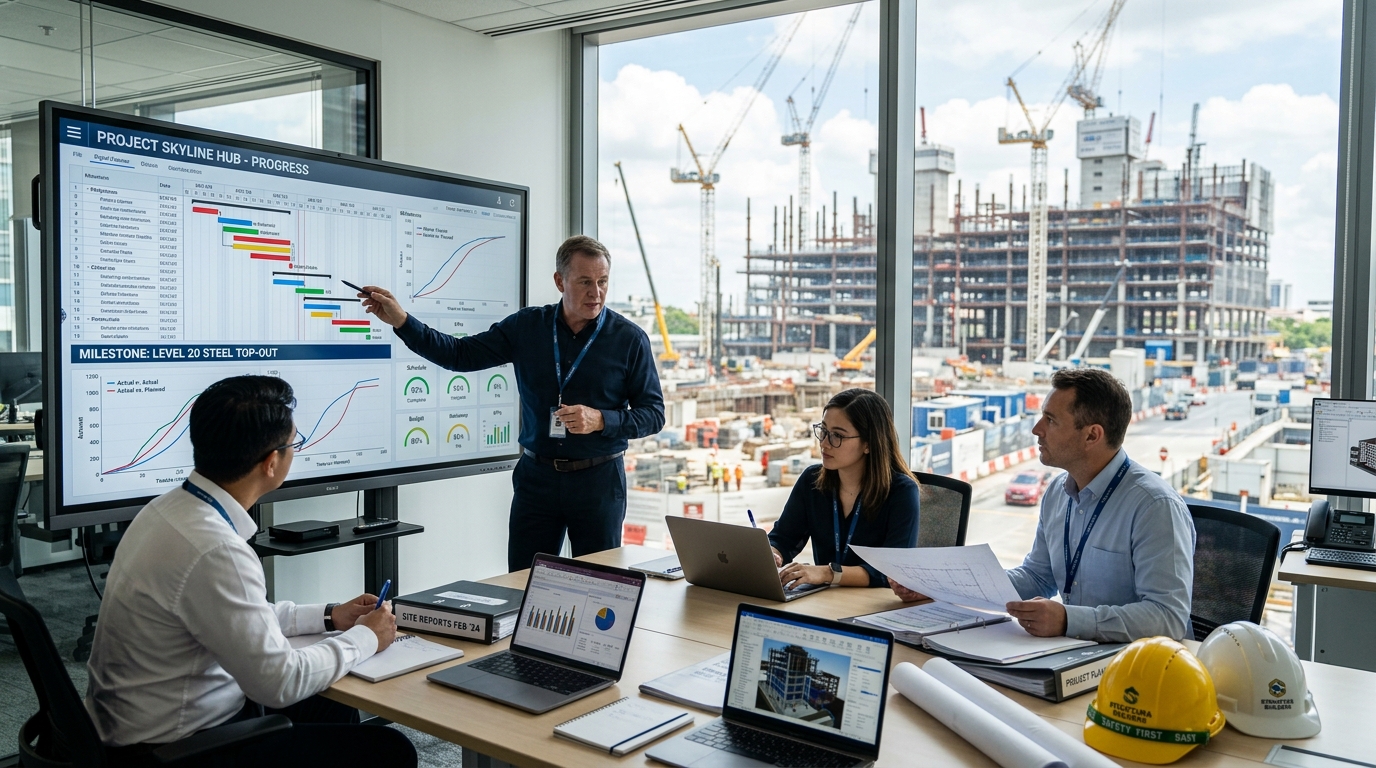
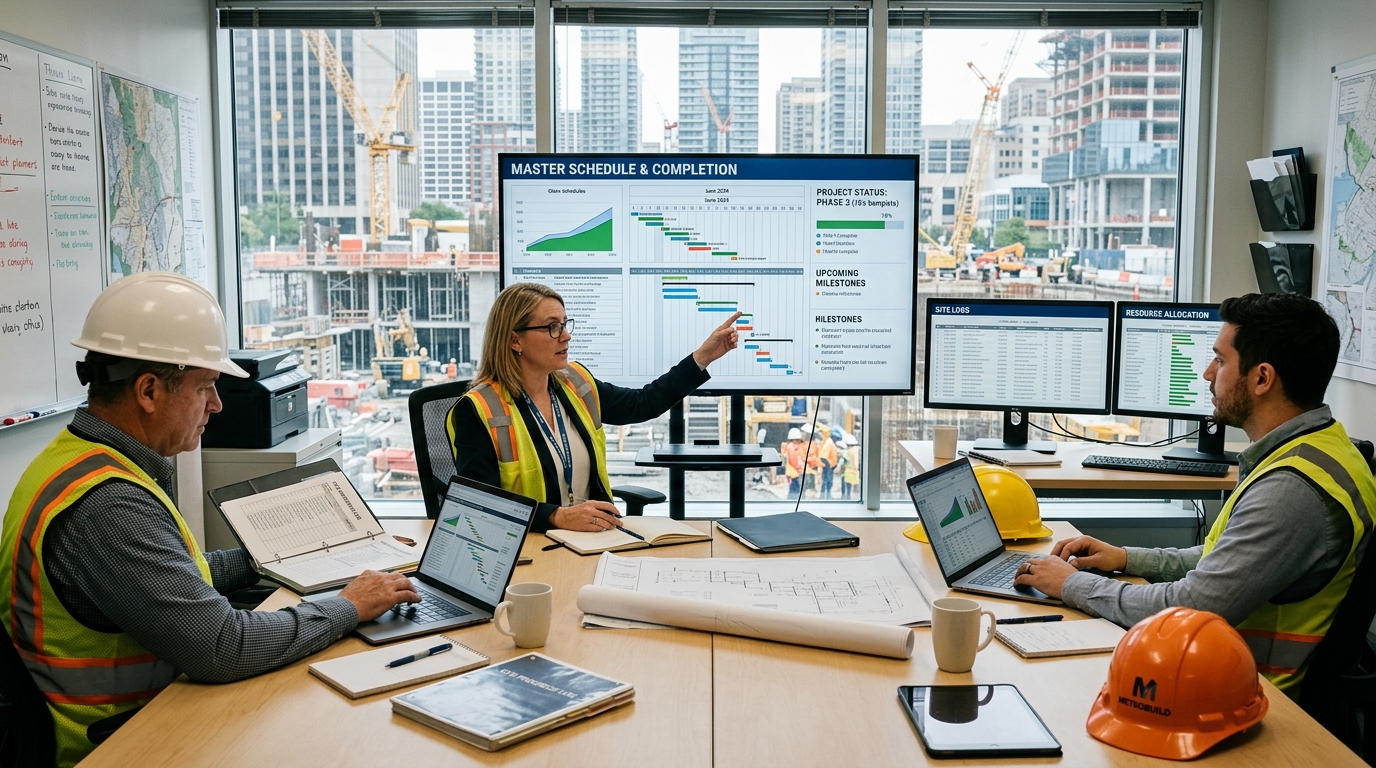
Solvix International provides progress monitoring and reporting services that give project stakeholders a clear, reliable view of actual performance, forecast exposure, and the actions needed to protect delivery. We take raw site information, schedule updates, procurement data, engineering status, cost indicators, and commercial inputs and convert them into structured project controls reporting that supports timely decision-making.

SERVICE SCOPE

What this service covers

A good progress monitoring and reporting system does more than record what happened. It explains what changed, why it changed, what happens next, and which decisions matter most now.

Key Reporting Indicators

PROGRESS
REPORTING
Planned vs actual progress
Milestone status
Critical path movement
Forecast completion
Procurement and design status
Risks and actions
REPORTING OBJECTIVES

What a well-prepared progress report should achieve

Progress reporting can be set up at the start of a project, introduced on a live project, or provided as independent client-side reporting alongside the contractor’s own reports.

0 +

Successfully Completed Projects

0 +

Years of Industry Experience

0 M+

Total Project Investment Value

REPORTING FOCUS

Typical reporting components

Progress reporting cycle

A repeatable cycle for collecting, validating, analysing, and reporting progress each period

1. Set the data date

Confirm the reporting period, status date, and the baseline used for comparison.

➜

2. Collect progress

Gather site progress, quantities, and milestone evidence from contractors and site teams.

➜

3. Validate the data

Check reported progress against site observations, photographs, and records.

4. Update the schedule

Status the programme and review movement in the critical path and forecast dates.

➜

5. Analyse variance

Explain slippage, its causes, and its effect on milestones and completion.

➜

6. Report and track actions

Issue the report pack and record agreed actions for follow-up in the next period.

Each report states the data date, the sources used, and any progress figures that could not be verified.

WHAT A GOOD PROGRESS REPORT INCLUDES

Core elements usually expected in a periodic progress report

Status

State progress against plan by area or package.

Evidence

Show the site data and records used.

Variance

Explain slippage and its causes.

Forecast

Set out the effect on milestones and completion.

Actions

List decisions needed and action owners.

IMPLEMENTATION APPROACH

How we implement progress monitoring and reporting

The exact method depends on contract requirements, reporting cadence, data maturity, project phase, and stakeholder expectations. However, the core reporting logic remains consistent: gather trustworthy data, validate it, convert it into structured project controls insight, and issue concise reports that help management act quickly and confidently.

1. Define the reporting framework:

agree reporting calendar, KPI set, dashboard structure, audience, and escalation thresholds.

2. Collect and validate project inputs:

review site updates, quantities, milestone evidence, schedule status, procurement logs, and design progress information.

3. Update controls and reporting registers:

refresh schedule views, issue logs, action trackers, milestone tables, and forecast assumptions.

4. Analyse variance and forecast exposure:

identify slippage, trend movement, root causes, and likely consequences if no corrective action is taken.

5. Issue management reporting packs:

produce dashboards, narrative commentary, graphics, heat maps, and executive summaries.

6. Track actions to closure:

record agreed mitigation measures, responsible parties, and follow-up status in the next reporting cycle.

RECORDS AND OUTPUTS

Typical inputs and deliverables

High-quality reporting depends on disciplined data collection and transparent assumptions. Solvix works with live project records and identifies any reliability issues, missing evidence, or inconsistencies that may affect the confidence level of the reported position.

Typical inputs

  • Baseline schedule, updates, milestones, and look-ahead plans
  • Daily logs, site progress updates, quantities, photos, and area completion records
  • Engineering and procurement trackers, approvals logs, and long-lead status
  • Risk registers, issue logs, commercial alerts, and action trackers
  • Cost or cash-flow indicators where integrated reporting is required
  • Meeting minutes and management decisions from prior cycles

Typical deliverables

  • Weekly or monthly progress report pack
  • Executive summary and dashboard view with KPIs and highlights
  • Milestone tracker and forecast completion summary
  • Variance, risk, and issue commentary with recommended actions
  • Presentation material for governance or stakeholder meetings
  • Action log showing owner, target date, and closure status
FAQS

Frequently asked questions

It typically includes data collection, schedule and milestone tracking, variance analysis, forecast reporting, dashboards, executive summaries, and action tracking.

Yes. Solvix can integrate reporting with live schedule updates, look-ahead views, critical-path focus, and management forecast commentary.

No. Many clients use structured reporting from day one to create visibility, improve governance, and detect risk early rather than waiting for problems to escalate.

Our Portfolio

Related Projects

Successfully executed across the globe — showcasing our commitment to excellence.
Cairo Office
Services Available
Local Expertise. Global Standards.
Our Cairo team combines deep local knowledge with international best practices to deliver exceptional results for every project.
UAE Office
Services Available

Local Expertise. Global Standards.

Our Dubai team combines deep local knowledge with international best practices to deliver exceptional results for every project.

KSA Office
Services Available
Local Expertise. Global Standards.
Our Riyadh team combines deep local knowledge with international best practices to deliver exceptional results for every project.
Australia Office
Services Available
Local Expertise. Global Standards.
Our Sydney team combines deep local knowledge with international best practices to deliver exceptional results for every project.
USA Office
Services Available

Local Expertise. Global Standards.
Our US team combines deep local knowledge with international best practices to deliver exceptional results for every project.
UK Office
Services Available
Local Expertise. Global Standards.
Our London team combines deep local knowledge with international best practices to deliver exceptional results for every project.