




































- June 29, 2026
- Uncategorized
Comparison Between Project Recovery and Revised P6 Schedule
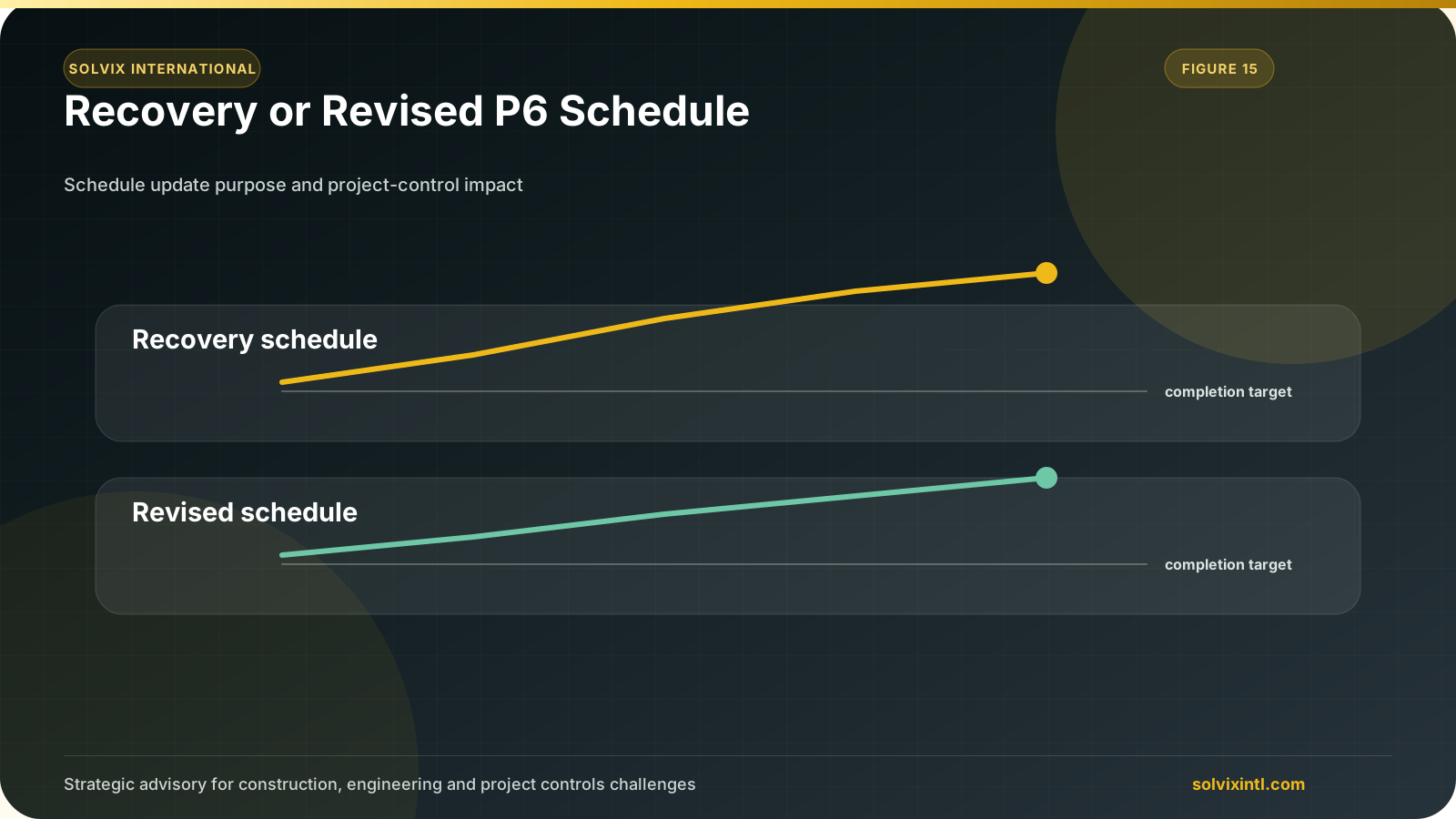
In this article, we aim to explore the importance of project recovery schedules and their differences from revised P6 schedules. At the start of any project, a pre-approved P6 schedule is developed to highlight the planned sequences for the project. According to PMI, they define the baseline schedule as the authorized version of the scheduled model that executives use as a comparison benchmark with actual outcomes. Recovery or revised schedules are employed when there is a modification in planned values within the baseline schedule. These changes could be due to circumstantial events or delays caused by all parties involved. A recovery schedule in P6 outlines strategic plans and measures intended by project teams to get projects on track.
Whereas a revised schedule in P6 comes into play when alterations arise concerning project scope, rescheduling, and resource requirements. We can conclude that the primary distinction between recovery and revised schedules lies within completion dates; where recovery schedules have equal completion dates compared to original “baseline completion dates,” while revised ones entail changes made towards initial completion dates.
It is an entirely new plan reflecting modifications implemented within projects. Below are steps to create a revised schedule using P6.
Find the changes that need to be made to the project schedule.
Update the project schedule to reflect the changes.
Analyze the new critical path and adjust the schedule as needed.
Uses for recovery or revised schedule
Recovery schedule:
Construction acceleration
The not realistic original schedule
Changes in resources
Revised schedule:
Delayed project
Delays in the critical path
Delays in the project
Variations or changes in project scope
Impact analysis
Impact analysis plays a significant role in implementing revised or recovery schedules.
Revised schedule impact analysis: it assesses the impact of schedule changes, where changes have various aspects as:
Project timeline.
Resources
Cost
Risks
Recovery schedule impact analysis: it focuses on assessing the delay events and changes in schedule consequences.
Time-sensitive activities.
Resource requirements
Project dependencies
Stakeholder expectations
Impact analysis is tied to the implementation of revised and recovery schedules. It helps project controls to check the consequences of schedule changes on all the project elements. To learn more about the different EOT Analyses, you can check our article: EOT (Extension of Time)
Implementation and execution
When we have a delay and request to send a recovery/ revised schedule, the below steps will discuss the best way to prepare this schedule:
Remove the baseline if any is assigned.
Insert any added scope of work.
Fix out-of-sequence activities.
Firstly, view the log and fix all the out-of-sequence activities to zero.
Fix unsatisfied relationships.
Fix finished dates to existing dates or new approved dates.
Assign “Must Finish By” date.
Then apply the longest path filter.
Remaining early start date = data date +1
Add or fix cost loading.
Fix the remaining duration decimal.
Fix actual start dates of in progress.
Change the actual duration that has higher values to be equal to the old actual duration
By using Excel, you can export data and then import it again to Primavera.
The equation to calculate the new actual date.
Global Change for completed and in progress.
Global change #1:
Activity Status =Completed
Original Duration = At completion
Global Change #2:
Activity Status =Completed
Planned Start = Actual Start
Planned Finish = Actual Finish
Global Change #3:
Activity Status =In Progress
Planned Start = Actual Start
Need support with this topic?
Solvix provides recovery schedule and revised schedule preparation services

ramez.megahed.sci@gmail.com
Head of Architecture & DesignHead of Architecture & Design with over a decade of experience leading large-scale real estate and construction projects. Known for his strategic mindset and leadership excellence, he has successfully driven high-value developments from concept to completion while ensuring operational efficiency and long-term growth.